Pest prevention around the home, from entry points to moisture
Most pest problems start with a gap, a damp spot or an easy meal. This guide walks you around the outside of your home and back through the kitchen, then explains when a licensed pest professional should take over.
Pests are practical creatures. Mice, ants, roaches, termites and wasps are looking for the same three things you want from a house: shelter, water and food. When a home offers all three with an easy way in, they move in. When it offers none, most of them keep walking.
That makes prevention less about sprays and more about ordinary upkeep. Sealing a gap around a pipe, fixing a dripping hose bib, pulling mulch back from the foundation and storing pet food in a lidded bin all do quiet, steady work. No house is ever truly pest-proof, and nobody honest will promise otherwise. You can make yours a lot less inviting, though, and learn the signs that mean it’s time to bring in a pro.
01Step 1 of 7
Walk the outside like a mouse would
Start with a slow lap around the house in daylight, carrying a flashlight for the shady spots. Get low. Look where pipes, cables, dryer vents and air conditioning lines pass through the siding or foundation, since the holes cut for them are often larger than the line itself. Check under the garage door, around basement windows and at the corners where siding meets the foundation. A mouse can squeeze through a gap that looks far too small for it, so anything you could slide a pencil into deserves a second look. Snap photos as you go so you can plan one afternoon of repairs instead of ten.
Utility penetrations
Pack gaps around pipes and cables with copper mesh or steel wool, then seal over it with exterior caulk. Foam by itself is easy for rodents to chew through.
Door sweeps and garage seals
Replace worn sweeps on exterior doors and the rubber seal along the bottom of the garage door. If you can see daylight under a closed door, so can a mouse.
Vents and chimney openings
Foundation, attic and gable vents need intact screens. A chimney without a cap invites birds, squirrels and raccoons, so have a chimney professional fit one.
Leave weep holes open
The small gaps along the bottom of brick walls let moisture drain out. Don’t caulk them shut; use inserts made for weep holes that block insects but still let water escape.
02Step 2 of 7
Dry out the places pests drink
Water draws more pests than most homeowners realize. Termites, carpenter ants, cockroaches, silverfish and centipedes all favor damp wood and humid corners, and mosquitoes need only a little standing water to breed. Walk the house a second time, looking only for moisture. Watch for a dripping outdoor faucet, an air conditioning condensate line soaking the same patch of soil, gutters that spill over one corner in every storm and downspouts that dump water right at the foundation. Indoors, look under sinks, behind the washer and around the water heater. Fixing a small leak often does more for pest prevention than anything on a store shelf.
Crawl spaces and basements
A musty smell, sweating pipes or damp insulation suggest a humidity problem. A dehumidifier, vapor barrier or better drainage may help, and a qualified contractor can tell you which fits your home.
Standing water outside
Empty plant saucers, buckets, toys and tarps after rain. Refresh bird bath water every few days, and keep gutters clear so they don’t hold puddles.
03Step 3 of 7
Keep a clear strip around the foundation
The zone right next to your walls is where the yard meets the house, and pests use it as a bridge. Shrubs pressed against siding, tree limbs resting on the roof and thick mulch piled up to the siding give insects and rodents cover and a path inside. Leave a gap between plants and the house, keep branches trimmed back from the roofline and rake mulch thin near the foundation. Soil and mulch should stay low enough that you can still see the top of the foundation. That visible strip also makes termite mud tubes easier to spot early.
Firewood and stored clutter
Stack firewood off the ground and away from the house, and bring in only what you’ll burn soon. Lumber, boxes or yard debris against a wall make easy nesting spots.
Trash and compost
Use outdoor bins with tight lids, rinse recycling and keep compost a sensible distance from doors and windows. Bags left out overnight are a buffet for raccoons and rodents.
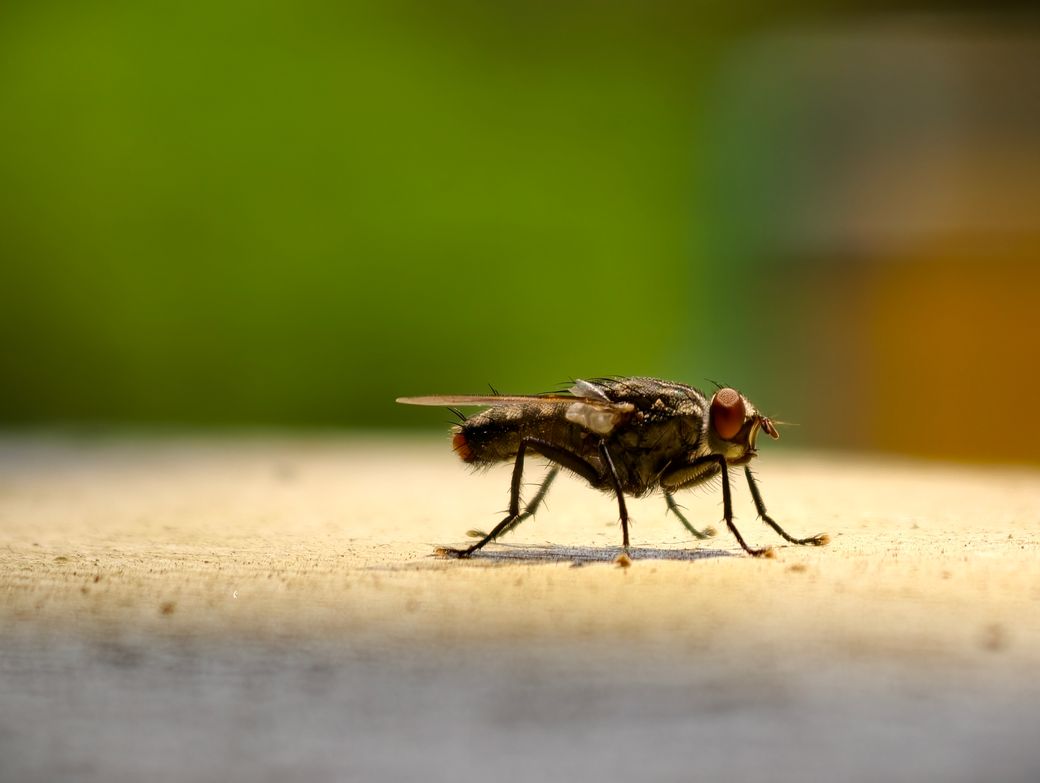
Detailed macro shot of a housefly
04Step 4 of 7
Take away the easy meals indoors
Inside, the goal is simple: leave nothing out that a pest can eat. Store flour, cereal, rice and pet food in containers with sealing lids, not the bags they came in. Wipe counters at night, deal with dirty dishes before bed and sweep under the toaster and along the edge of the stove. Pet bowls left full overnight feed more than the dog. Check the garage and pantry too, since a forgotten bag of birdseed or grass seed can draw mice from next door. None of this has to be spotless. It just has to be consistent.
Inspect what you carry in
Look over cardboard boxes, grocery bags and secondhand furniture before bringing them inside. Roaches and bed bugs often arrive as passengers rather than finding their own way in.
05Step 5 of 7
Learn the signs that something moved in
Pests usually leave evidence before you ever see them, and catching those clues early keeps a small problem from settling in. A few times a year, check the backs of cabinets, under sinks, along baseboards and in the attic and garage. Scratching inside walls at night, a sudden line of ants along one path or a stale, musky odor all deserve attention. When you find something, note where and when, and take a photo. That record helps a pest professional identify the problem faster and target the fix instead of treating the whole house.
Droppings and gnaw marks
Small dark droppings in drawers or along walls, chewed food packaging and greasy rub marks on baseboards usually point to mice or rats.
Mud tubes and shed wings
Narrow mud tubes climbing the foundation, or little piles of wings near windowsills in spring, can signal termites. Call a licensed pro instead of breaking the tubes open.
Sawdust below wood trim
Fine, sawdust-like material under trim or in the attic may come from carpenter ants or wood-boring beetles, especially near an old leak.
Nests near doorways
Wasp and hornet nests under eaves, in shrubs or inside a grill cover become a real hazard near walkways and play areas. Leave removal to a professional.
06Step 6 of 7
Know where DIY ends and a licensed pro begins
Plenty of prevention is yours to handle: sealing gaps, fixing leaks, cleaning up and setting snap traps where kids and pets can’t reach them. Pesticide use is a different matter. Termites, bed bugs, stinging insect nests, rodents inside walls and most structural problems belong with a licensed pest control professional who knows the products, safe application methods and local rules. Pesticide laws and applicator licensing vary by state and sometimes by city. If you do use an over-the-counter product, read the whole label first and follow it exactly, including where it can go and how much to apply.
Wildlife is its own trade
Raccoons, squirrels, bats and snakes are usually handled by wildlife control specialists, and removal rules differ from place to place. Never seal an opening until you’re sure no animal is inside.
07Step 7 of 7
Hire a pest control company with clear questions
When you call in a pro, ask how they approach the job, not just what they spray. Many careful companies start with an inspection, identify the pest, fix or recommend fixes for entry points and moisture, then use targeted treatments and follow-up monitoring. That approach is often called integrated pest management. Ask whether the company and the technician are licensed in your state, which products they plan to use and why, and how they protect children, pets, gardens and pollinators. If they offer recurring service, get the visit schedule, what’s covered between visits and the cancellation terms in writing before you sign.
Ask for the paperwork
Request inspection findings, the products applied and any safety instructions in writing. Keep them with your home records in case you sell or need follow-up service.
Slow down under pressure
A company that insists you sign today, or quotes a price before looking at anything, isn’t giving you the full picture. Take the time to compare more than one.
Your seasonal pest walk-around
0 of 8
Tick items off as you go. Nothing is saved or sent anywhere.
Common questions
You can buy products labeled for homeowner use, but spraying shouldn’t be the first step. Sealing gaps, fixing moisture and cleaning up food sources solve a lot of problems without chemicals. If you use a product, follow the label exactly and keep kids and pets away. For anything recurring or structural, a licensed pro who knows your state’s rules is the safer route.
Common clues include mud tubes running up the foundation, piles of discarded wings near windows or doors, wood that sounds hollow when tapped and paint that bubbles over wood. None of these prove termites on their own, so have a licensed pest professional inspect and confirm. Don’t break open the tubes or treat the area yourself first, since that can make an accurate inspection harder.
As nights cool, mice, spiders, stink bugs, lady beetles and other insects look for warm shelter, and your walls, attic and garage are appealing. Late summer is a sensible time to seal gaps, repair screens and check door sweeps before that push indoors starts. Spring brings its own wave of ants and termite swarms, and timing varies by region, so a check twice a year covers most homes.
Ask the technician directly. A licensed professional should explain which products they plan to use, where they’ll apply them, how long children and pets should stay away from treated areas and what to do if someone is exposed. Applicator rules vary by state, and a reputable company will put safety instructions in writing. If an answer feels vague, ask to see the product label.
Pest prevention is mostly a habit rather than a one-time project. A slow walk around the house each season, a few tubes of caulk and some attention to leaks can handle much of the work, and a licensed pro can step in when a problem outgrows do-it-yourself fixes. HomeIsSecure publishes plain-English homeowner guides like this one as general education, not professional advice, so check your local pesticide rules and ask a licensed professional about anything specific to your home. Since water and pests so often travel together, drainage makes a good next read.
Gutters are only half the job. Learn how roof water should travel away from your house, how to clean safely, and simple downspout and grading fixes that help protect your foundation.
Most pests walk in through small gaps homeowners overlook. Here is where to look, from the foundation to the roofline, how to seal common openings, and when to call a licensed pro.
Lawn care depends on your grass type and climate. This season-by-season guide covers mowing, watering, feeding and fall work, plus the local rules and questions to ask before hiring help.
Read the article
Fill your schedule with homes that need you.
Property and homeowner records, service-area maps, routes and outreach tools for HVAC, roofing, plumbing, pest, lawn and handyman crews.