
Gutters and Downspouts: Keeping Water Away From Your Foundation
Gutters are only half the job. Learn how roof water should travel away from your house, how to clean safely, and simple downspout and grading fixes that help protect your foundation.
 HomeIsSecure Editors5 min read

In this article7 sections
Next time a steady rain rolls through, put on a jacket and take a slow lap around your house. Watch where the water goes. You will learn more about your gutters in ten minutes of watching than in an afternoon of poking at them on a dry day, because the rain shows you exactly where the system is working and where it isn't.
What you are really watching is a small drainage system with one job: collect the water that lands on your roof and deliver it far enough away that it never gets a chance to soak the soil around your foundation.
Where roof water is supposed to go
A roof sheds a surprising amount of water in a heavy storm, and nearly all of it heads for the edges. Gutters catch it and carry it to downspouts. Downspouts bring it to the ground. From there, an extension, splash block or buried drain should move it away from the house, and the ground itself should slope so the water keeps traveling.
The gutters themselves should tilt slightly toward each downspout. A gutter that still holds standing water a day after the rain stops has likely lost its slope or has a clog, and either one adds weight that strains the hangers.
When any link in that chain breaks, water ends up where it doesn't belong. It can pour over the edge and dig a trench in the flower bed. It can run behind the gutter and rot the fascia board. It can collect beside the foundation and soak in, where it may find its way into a basement or crawl space, wash out soil, or press against foundation walls. Over years, repeated soaking can contribute to cracks, settling and damp, musty lower levels. A gutter problem that looks small from the yard can be the start of a much bigger one below ground.
What to watch for in the rain
On your rainy lap, keep an eye out for a few telling clues.
Water spilling over the front edge of a gutter usually means a clog nearby, often at the downspout opening, or a gutter that has lost its slope toward the outlet. Drips or streams running behind the gutter suggest it has pulled away from the fascia or that the drip edge doesn't overlap it properly. Water shooting out of joints or corners points to failed seams. A downspout that gurgles but barely flows is likely clogged partway down. And water pooling next to the house at the bottom of a downspout tells you the discharge isn't going far enough.
On a dry day afterward, look for the evidence: sagging runs, loose hangers, peeling paint or dark stains on the fascia, rust spots, and bare, washed-out soil or mulch below the gutter line.
Cleaning without getting hurt
Many homes need gutter cleaning at least twice a year, typically late spring and late fall, and more often under tall trees. On a single-story house with firm, level ground, it's a reasonable DIY job if you're comfortable on a ladder. Use a sturdy ladder on stable footing, never lean it against the gutter itself, keep your body centered between the rails, and have someone nearby. Scoop debris into a bucket, then flush the gutters with a hose to check that water flows toward the downspouts.
Check the downspouts while you're at it. Clogs tend to form at the top opening and at the elbows. Running a hose down from the top usually tells you quickly whether water gets through. If it backs up, removing the bottom elbow or using a plumber's snake from below may clear it.
For two-story homes, steep lots, roofs you'd have to walk on, or anyone uneasy on a ladder, hire a pro. Roof work and high ladder work carry real fall risk, and no clean gutter is worth an injury.
Gutter guards can cut down on cleaning, but they don't eliminate it. Some designs still collect fine debris, pine needles or seed pods and need periodic attention, so ask any installer how their product handles the trees in your yard.
Downspouts and extensions
The bottom of the downspout is where many homes fall short. Water should come out several feet from the foundation, and farther if your soil drains slowly or your lot slopes toward the house. Splash blocks help a little. Extensions, flexible or hinged, do more. Buried drain lines can carry water well away from the house, but they need a proper outlet and occasional checking, since a crushed or clogged buried line can send water right back toward the foundation.
Where the water ends up matters too. Directing runoff onto a neighbor's property, a sidewalk or a street can run afoul of local rules, which vary by city and county. The same goes for rain barrels, which some areas encourage and others regulate. Check with your city or a local drainage contractor before making big changes.
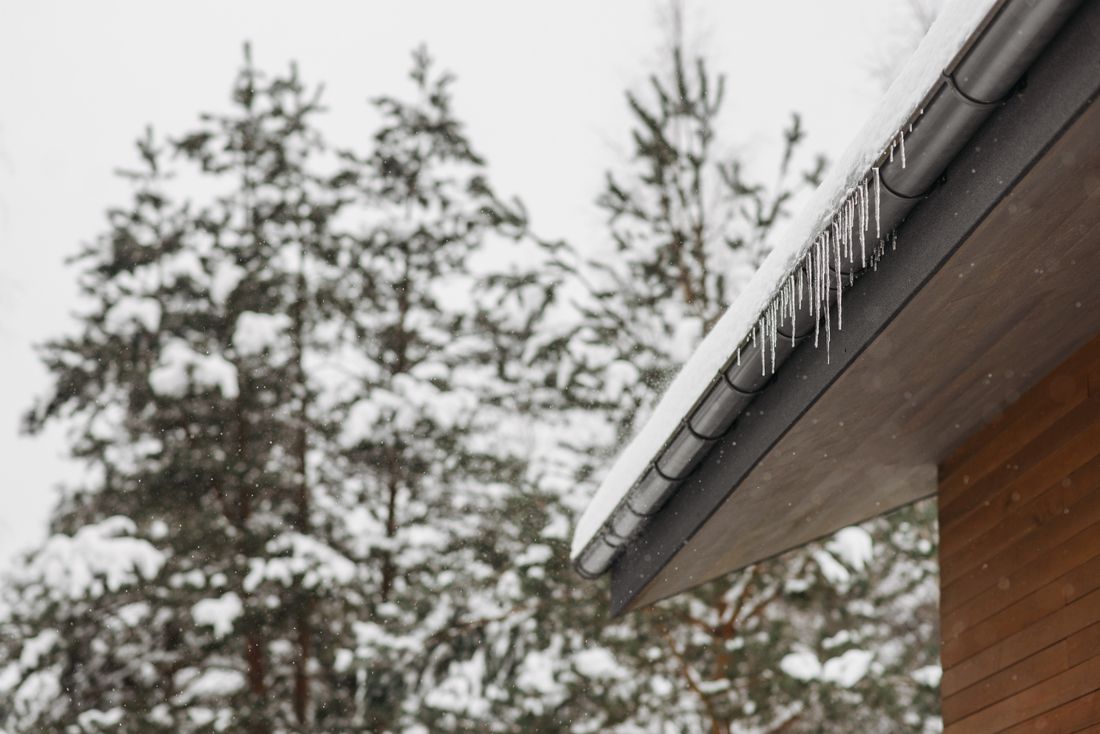
In cold climates, watch for ice building up in gutters and at downspout outlets, where a frozen extension can force meltwater back toward the house. Heavy icicles along the eaves can also point to heat escaping into the attic, which a roofer or insulation contractor can look into.
The ground right next to the house
Even perfect gutters can't help if the soil beside the house slopes toward it. Look at the first several feet around your foundation. Over time, backfill settles, mulch beds build up, and patios or walkways can tilt. The goal is ground that falls away from the house on all sides. Keep mulch and soil a few inches below siding and away from the top of the foundation, and pull back any beds that have been topped up year after year. Basement window wells deserve a look too. They should have a base that drains, and a cover can keep leaves and water from collecting against the window. If an area floods, or a driveway or patio drains toward the house, a grading or drainage contractor can assess it.
A seasonal gutter checklist
Use this list in spring and fall:
- Clear leaves, needles and roof granules from gutters, then flush with a hose.
- Check that each downspout flows freely from top to bottom.
- Confirm extensions are attached and pointing away from the house.
- Tighten or report loose hangers, sagging runs and leaking seams.
- Look for peeling paint, stains or soft spots on fascia boards.
- Check that soil and mulch slope away from the foundation.
- Look at basement or crawl space walls for new dampness after heavy rain.
- Trim branches that overhang the roof, or have a tree pro handle big limbs.
For more homeowner guides
Gutters are one of those jobs that quietly keep bigger problems from ever starting. HomeIsSecure publishes practical guides on roofs, seasonal checklists and hiring a contractor, written for homeowners who want to understand their houses before something goes wrong.
This article is general information, not professional advice. Gas, electrical, roof and pesticide work belongs with licensed pros, and codes and permits vary by state and city.