Gutters, downspouts and drainage: moving water away from your house
All the rain that lands on your roof has to go somewhere. Here’s how to keep gutters flowing, send downspout water well away from the foundation and spot drainage trouble before it reaches the basement.
Gutters don’t get much attention until one overflows in a storm and you watch a sheet of water pour straight down onto the flower bed, or the foundation. A roof sheds a lot of rain, and the gutter system’s only job is to collect it and carry it far enough from the house that it can’t soak the soil against your walls.
When that system falls behind, the damage tends to show up somewhere else: a damp basement corner, peeling paint on the fascia, a sunken patio, carpenter ants in a soft window sill. Most gutter and drainage care is simple, seasonal and easy to check from the ground. The steps below cover what to look for, what you can handle and when a roofer or drainage contractor should step in.
01Step 1 of 8
Understand where the water is supposed to go
Picture the path of a single rainstorm. Water sheds off the shingles, over the drip edge and into the gutter. The gutter slopes gently toward a downspout, the downspout carries it to the ground and an extension or drain line moves it away from the house. From there, soil that slopes away from the foundation should carry it farther still. A weak link anywhere in that chain pushes water back toward the house. Spotless gutters won’t help much if the downspout empties into a low spot beside the basement wall. Keep the whole path in mind as you work through the rest of this guide.
02Step 2 of 8
Watch your gutters during a real rain
The easiest inspection you’ll ever do happens during a steady rain. Put on a raincoat and walk around the house, staying on the ground. You’re looking for water spilling over the front edge of a gutter, drips at seams and corners, water running behind the gutter against the fascia and downspouts that gush at the joints instead of flowing out the bottom. Note where water pools in the yard and whether any of it runs back toward the house. Stay off ladders in wet weather; this is a look-only job. Ten minutes in the rain can tell you more than an hour on a dry afternoon.
Overflow at one spot
Usually means a clog near that spot or at the downspout opening, or a section that has lost its slope and now holds water.
Water behind the gutter
Often points to a missing or short drip edge, or a gutter that has pulled away from the fascia. A roofer or gutter installer can correct it.
Stains under seams
Streaks on siding or brick directly below a seam or corner suggest a slow leak that keeps wetting the same spot every time it rains.
03Step 3 of 8
Clean gutters safely, or hand it off
Many homes need gutters cleaned in late spring and again after the leaves drop, and more often under pines or heavy tree cover. If you do it yourself on a single-story house, set the ladder on firm, level ground, use a stabilizer so it doesn’t lean on the gutter, and have someone nearby. Scoop debris into a bucket, then flush each run with a garden hose and watch it drain through the downspout. A two-story or steep roofline, power lines near the gutters or anything that means walking on the roof is a job for a professional, and roof work belongs with a licensed, insured roofer. A fall from a ladder isn’t worth the fee you’d keep.
Clearing a stuck downspout
Try flushing it from the bottom up with a hose first. If it won’t clear, the clog is often at an elbow, which a handy homeowner can usually detach and clean on the ground.
Skip the pressure washer
High pressure can bend thin gutters, drive water under shingles and strip granules from the roof. A hose and a gloved hand do the job with far less risk.
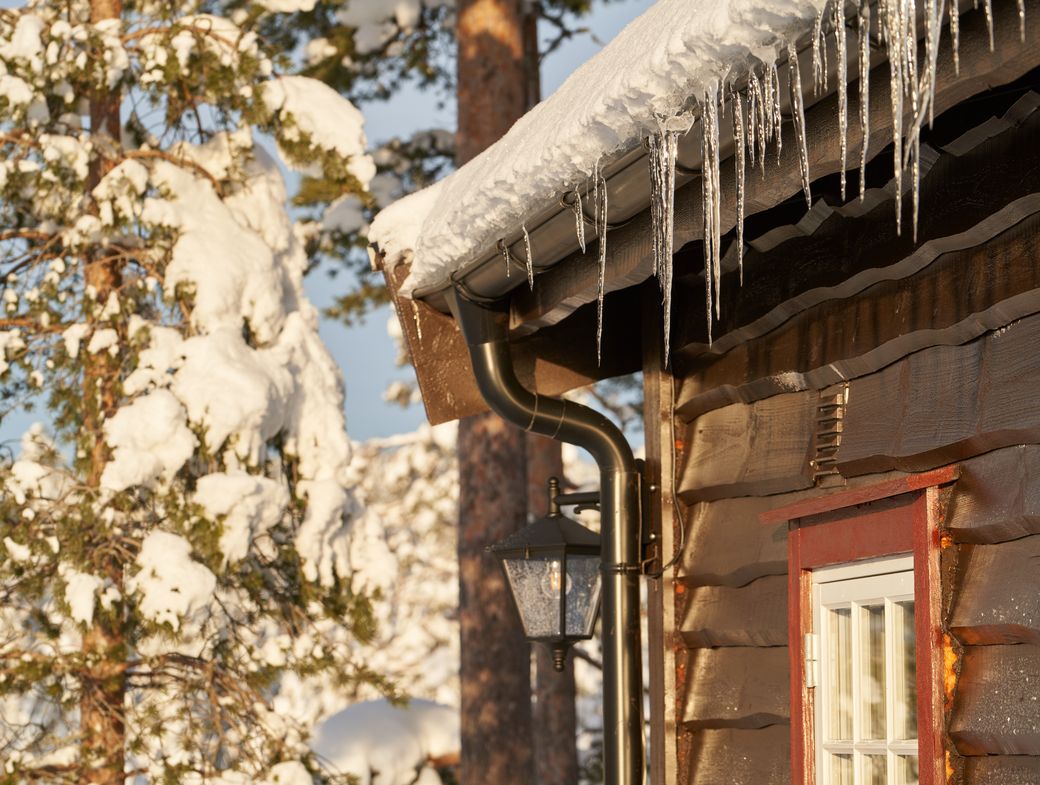
Cozy wooden cabin with icicles on the roof, set in a snowy forest
04Step 4 of 8
Check slope, hangers and seams
Once gutters are clean, look at how they hang. A gutter should run in a straight line with a slight fall toward each downspout, so water keeps moving instead of sitting. Sagging sections, gutters that have pulled away from the fascia and hangers that have backed out of the wood all let water pool, which adds weight and makes the sag worse. On older metal gutters, look for rust spots and leaking seams, and check for soft or dark fascia boards behind them. Small seam leaks can often be sealed with a gutter sealant made for the material. Rotted fascia, repeated sagging or a system that needs re-pitching usually calls for a gutter installer or roofer.
A simple slope test
After cleaning, pour a bucket of water into the far end of a run. It should flow steadily to the downspout without pooling along the way.
Fasteners that let go
Older spike-style fasteners tend to work loose over the years. Hidden hangers held with screws usually hold better, and a pro can tell you whether yours need replacing.
05Step 5 of 8
Send downspout water well away from the foundation
A clean gutter that empties at the corner of the house just moves the problem a few feet. Every downspout needs an extension, splash block or drain line that carries water away from the foundation and onto ground that slopes away. Many contractors suggest several feet of discharge, and more on clay soil or next to a basement. Make sure extensions stay attached after mowing and that water doesn’t end up on a walkway where it can freeze, or in a neighbor’s yard. Underground drain lines look tidy, but they can clog or crack out of sight, so find the outlet and confirm water actually comes out during a rain.
Local rules on discharge
Some cities restrict tying downspouts into sewer lines or sending water onto sidewalks, streets or neighboring lots. Check with your local building or public works office before rerouting.
Rain barrels
A rain barrel can capture roof water for the garden, but it needs an overflow that also points away from the house. Rainwater collection rules vary by state and city.
Buried lines that never drain
If a buried line has no visible outlet or never seems to run, a drainage contractor can camera or flush it. Roots and crushed pipe are common culprits.
06Step 6 of 8
Look at the grading around your foundation
Gutters handle the roof, but the ground around the house handles everything else. Soil next to the foundation should slope away from the walls, not toward them. Over the years backfill settles, flower beds get built up and patios sink, and the slope quietly reverses. Stand at each corner after a rain and look for puddles against the foundation, soil washed out below downspouts or a patio tilting toward the house. Adding and tamping soil to restore a gentle slope is a reasonable weekend project on a small scale, as long as soil and mulch stay below the siding. For bigger regrading, window well trouble or a basement that stays wet, call a drainage contractor, landscaper or waterproofing specialist.
Call before you dig
Before any digging, even for a small drainage fix, contact your area’s call-before-you-dig service so buried gas, electric and water lines can be marked first.
Window wells
Clear leaves and debris from window wells and check that each has a working drain at the bottom. A clear cover keeps rain and leaves out while still letting light in.
07Step 7 of 8
Weigh guards, upgrades and replacement
Gutter guards can cut down on cleaning, especially under heavy tree cover, but they don’t end it. Screens, fine mesh and solid covers that let water curl in at the edge all still need an occasional check, and small debris like pine needles and roof granules can build up on top or underneath. Ask any installer how their guard handles your trees and roof pitch, how it attaches and whether it affects your roof warranty. Other upgrades to ask about include larger downspouts for long runs, extra downspouts on a big roof and one-piece gutter runs formed on site, which have fewer joints to leak. Replacement makes sense when rust, rot or constant repairs outweigh what the old system is worth.
08Step 8 of 8
Plan for ice, snow and freeze-thaw
In cold climates, gutters take extra strain. Heavy snow and ice can bend hangers and pull gutters loose, and downspouts that freeze solid send meltwater over the edge. Ice dams, the ridges of ice that form at the roof edge and back water up under shingles, usually trace back to heat escaping into the attic rather than to the gutters themselves. Better attic insulation, air sealing and ventilation address the cause. Don’t climb onto an icy roof or chip at ice with tools, which can damage shingles and put you at real risk. A licensed roofer can deal with an active ice dam, and any outlet or wiring for heat cables is work for an electrician.
Before the next big storm
0 of 8
Tick items off as you go. Nothing is saved or sent anywhere.
Common questions
It depends on your trees and your roof. Many homes do fine with a cleaning in late spring and another after fall leaves drop, while homes under pines or heavy tree cover may need more. The easiest way to decide is to watch during a steady rain. If water spills over the front edge, it’s time, whatever the calendar says.
No. Guards reduce the amount of debris that gets in, and some types suit certain trees well, but every type still needs checking. Fine debris, seed pods and roof granules can collect on top or slip through over time. Ask installers how their product performs with your trees and roof, and plan on an occasional inspection either way.
Clean gutters are only part of the picture. Check where each downspout empties, whether the soil slopes toward the house, whether window wells are draining and whether a patio or walkway tips water back at the foundation. If those look right and the basement still gets wet, a drainage contractor or waterproofing specialist can evaluate the foundation and soil.
For cleaning and small repairs, a gutter company or insured handyman is often enough. Rotted fascia, roof-edge damage, a missing drip edge or anything involving work on the roof calls for a licensed roofer. Water pooling at the foundation or in the basement points to a drainage contractor or waterproofing specialist. Licensing requirements vary by state and city, so confirm what applies where you live.
Gutters and drainage reward a little regular attention. Two cleanings a year, a walk around the house in the rain and a look at the soil near your foundation can catch many issues while they're still small and inexpensive to fix. Leave roof work and major regrading to licensed, insured pros, and check local rules before changing where water drains. HomeIsSecure puts together homeowner guides like this one for general education, and a qualified contractor who sees your house in person is the right person to assess its specific needs.
Gutters are only half the job. Learn how roof water should travel away from your house, how to clean safely, and simple downspout and grading fixes that help protect your foundation.
Most pests walk in through small gaps homeowners overlook. Here is where to look, from the foundation to the roofline, how to seal common openings, and when to call a licensed pro.
Lawn care depends on your grass type and climate. This season-by-season guide covers mowing, watering, feeding and fall work, plus the local rules and questions to ask before hiring help.
Read the article
Fill your schedule with homes that need you.
Property and homeowner records, service-area maps, routes and outreach tools for HVAC, roofing, plumbing, pest, lawn and handyman crews.